Anyone searching for "competitive intelligence software" will, in most cases, end up with tools that monitor competitors' websites, compare SEO rankings, or equip sales teams with battlecards for customer conversations. For marketing and sales teams, these are valuable tools. But for product developers, buyers, and cost owners who want to know how a physical competitor product is actually built and what it costs, these tools fall short. It's worth taking a closer look at the terminology – and at what product development really needs.
Where the Confusion of Terms Comes From
Competitive intelligence was originally an umbrella term for the systematic observation of a company's competitive environment – strategies, prices, market positioning, communication. With the digitalization of marketing and sales, this has, in recent years, evolved primarily into a software category specialized in digital signals: changes on competitors' websites, search engine visibility, customer reviews, social media activity.
Benchmarking, by contrast, has a different, older tradition in industrial product development: the systematic comparison of physical products, components, or processes with those of competitors – usually based on teardowns, in which a product is fully disassembled, documented, and analyzed.
At their core, both terms describe the same basic idea – "learning from the competition" – but applied to entirely different objects: digital signals on one side, physical products on the other.
What Classic Competitive Intelligence Tools Deliver
Software marketed under "competitive intelligence" is typically focused heavily on web-based data sources. It automatically monitors when a competitor changes its pricing page, publishes new content, or gains visibility in search engines. For marketing teams, this results in trend analyses; for sales teams, it's often turned into so-called battlecards – compact comparison overviews meant to help position against specific competitors in customer conversations.
What these tools naturally cannot do: physically disassemble a competitor's product, or compare material thicknesses, manufacturing processes, or component costs. They simply weren't built for that.
What Product Benchmarking Needs Instead
Product development, purchasing, and cost engineering need a different kind of comparison: How is a competitor's component designed? Which materials and manufacturing processes are used? What are the estimated production costs compared to one's own solution? And how does the competitor's product perform in terms of functionality or perceived quality?
These questions can only be answered through systematic teardown benchmarking: competitor products are procured, disassembled, documented photographically and functionally, and the individual components are evaluated in terms of cost. The resulting data feeds directly into development decisions – for example, into the question of whether a particular component in one's own product is over- or under-engineered compared to the competition.
Why the Distinction Matters
Product developers or buyers who search for a software solution using the general term "competitive intelligence" risk overlooking tools that aren't built for their actual question. Conversely, it's worth specifically searching for terms like "product benchmarking," "teardown analysis," or "technical benchmarking" to find solutions that were actually developed for physical product comparisons.
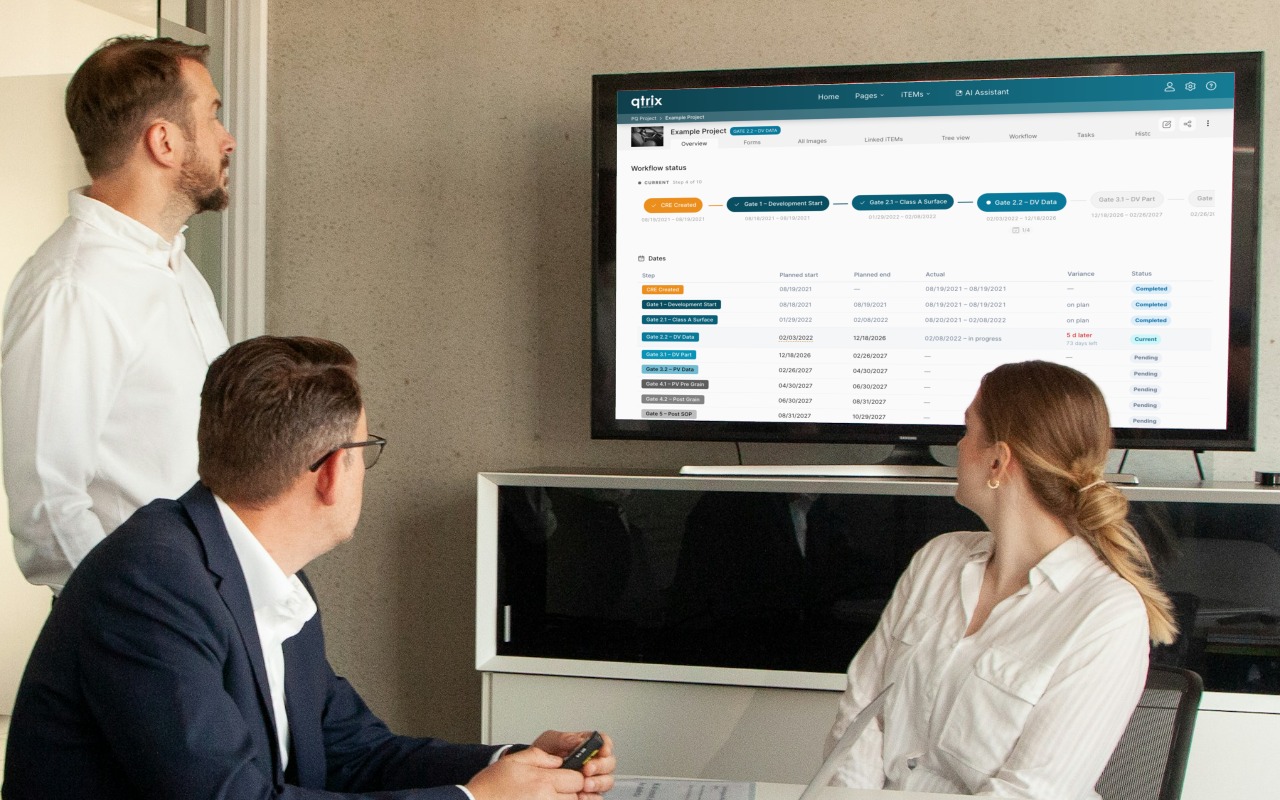
Platforms such as QTRIX by Calidat address exactly this use case: teardown data, cost analysis, and competitive comparison for physical products in a single system, complemented by tools for systematic documentation such as automated 360° component imaging. Regardless of the tool chosen, however, one thing remains true: anyone who really wants to understand competitor products needs more than digital market observation – they need a structured look inside the products themselves.